


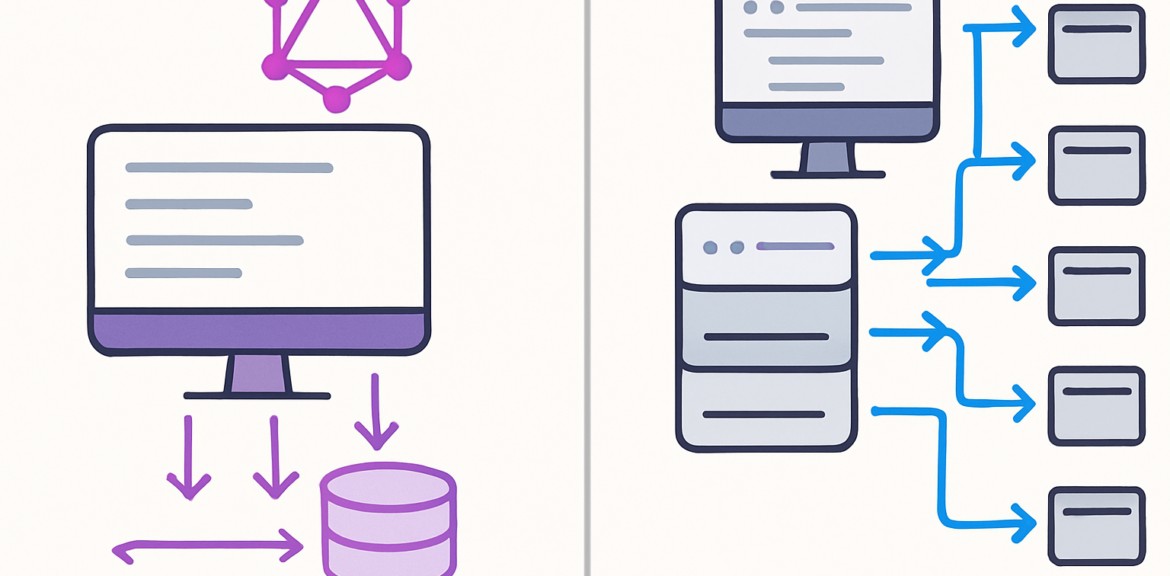

In the world of API design and development, the debate of GraphQL vs REST continues to capture the attention of developers and project managers alike. Choosing the right API can make or break your application’s performance and scalability. With REST being a longtime staple and GraphQL growing in popularity, understanding their differences and applications is crucial for making an informed decision for your next project.
Understanding GraphQL vs REST: Key Differences
REST, or Representational State Transfer, is a well-established architectural style for networked applications. It relies on stateless communication and uses HTTP methods like GET, POST, PUT, and DELETE to perform operations. While REST is intuitive and straightforward, it can sometimes lead to over-fetching or under-fetching data, especially in complex applications.
On the other hand, GraphQL is a query language for APIs, providing a more flexible approach by allowing clients to request exactly the data they need. This reduces unnecessary data transfer and can significantly enhance performance, especially for mobile apps and slow networks. GraphQL’s single endpoint can handle multiple resources, simplifying development and consumption of APIs.
When to Choose GraphQL Over REST
There are specific scenarios where GraphQL shines brighter than REST. If your application requires:
- Efficient Data Fetching: GraphQL allows clients to specify the structure of the response, fetching only the required data in a single request.
- Complex Relationships: Applications with complex object relationships will benefit from GraphQL’s ability to seamlessly handle nested requests and resolve all necessary data in one query.
- Rapid Development: Because GraphQL can evolve without versioning, it supports agile development practices, reducing API maintenance and improving client-developer relations.
REST: The Right Choice for Simplicity and Caching
Despite its limitations in some areas, REST is not obsolete. It remains a solid choice for APIs when:
- Simple Use Cases: For applications with straightforward data retrieval needs, REST’s simplicity and predictability are advantageous.
- Strong Caching: REST leverages HTTP caching mechanisms effectively, improving performance for repeat requests.
- Wide Adoption: REST’s maturity and widespread adoption make it easier to find resources and community support.
Comparing Performance and Flexibility
When comparing API performance, both technologies have their strengths. REST’s stateless nature supports horizontal scaling and resource caching, which can enhance speed in scenarios with repetitive data access. However, its tendency to over-fetch data can lead to inefficiencies.
GraphQL, with its data fetching techniques, minimizes data transfer by allowing clients to request only what they need. This leads to faster load times and improved performance, particularly in data-intensive applications.
According to a survey by the State of GraphQL, over 90% of developers reported significant performance improvements after switching from REST to GraphQL.
Security Considerations
Security is always a priority in web development. REST’s simplicity can be a double-edged sword, as it often relies on multiple endpoints, increasing the attack surface. Conversely, GraphQL’s single endpoint might be easier to protect, but its flexibility requires robust query validation to prevent abuse, such as Denial-of-Service (DoS) attacks due to expensive queries.
Key Takeaways
- GraphQL offers flexibility and efficiency, ideal for complex applications with variable data needs.
- REST provides simplicity and reliable caching, best for straightforward, lightweight applications.
- Choose GraphQL for modern applications needing agile development and minimal data transfer.
- Use REST when developing traditional applications with a need for strong caching and speed.
In conclusion, both GraphQL and REST have their place in the modern tech landscape. The choice between them should be guided by the specific needs of your application, taking into account factors such as data requirements, development speed, and the existing ecosystem. By understanding the strengths and limitations of GraphQL vs REST, you can make a choice that aligns perfectly with your project goals.
Frequently Asked Questions
- What is the main difference between GraphQL and REST?
-
GraphQL allows clients to request specific data, reducing over-fetching, while REST uses fixed endpoints that might return more data than necessary.
- When should I choose GraphQL over REST?
-
GraphQL is ideal for applications needing efficient data fetching, complex queries, and agile development without extensive versioning.
- Is REST still relevant in modern development?
-
Yes, REST remains relevant for its simplicity, predictability, and effective caching, making it suitable for straightforward applications.
- Can GraphQL improve performance compared to REST?
-
Yes, by allowing clients to request only necessary data, GraphQL can reduce load times and improve performance, especially in data-heavy applications.