


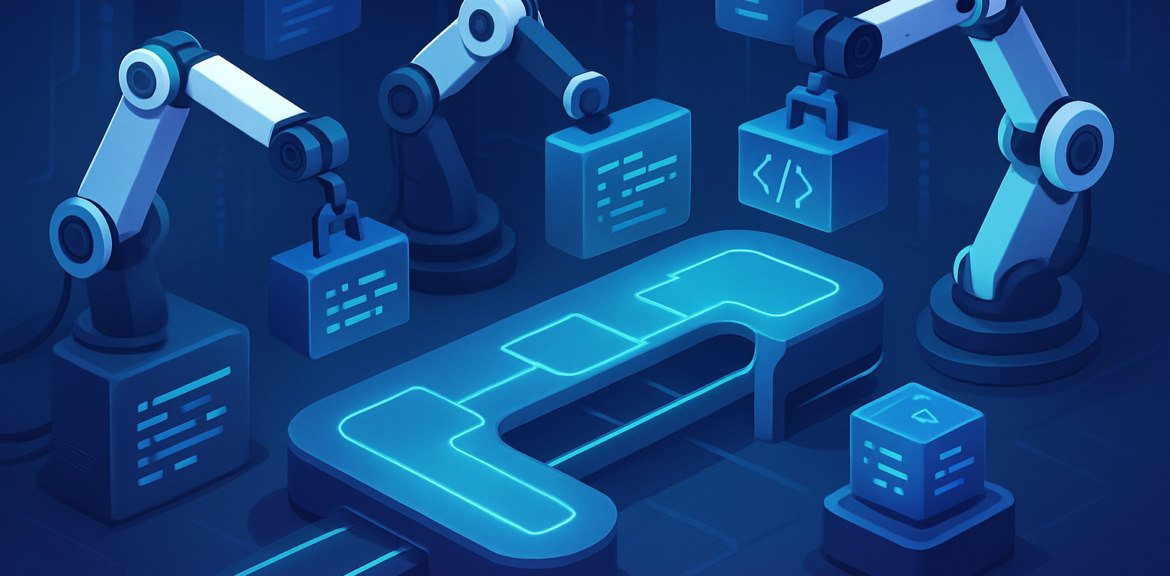

In today’s fast-paced software development landscape, businesses are under constant pressure to deliver new features quickly and reliably. CI/CD pipelines have emerged as a crucial component in meeting these demands by automating the build, test, and deployment processes. Within the first few moments of exploring CI/CD, you’ll discover how it can transform your software release cycles, reduce manual errors, and help your team stay competitive in the ever-evolving technology world.
Understanding CI/CD Pipelines
CI/CD stands for Continuous Integration and Continuous Delivery, a set of practices aimed at ensuring that software development occurs in a seamless, automated environment. With CI, developers frequently integrate code changes into a shared repository, triggering automated builds and tests. CD takes this a step further by automating the release of this code to production, ensuring that applications are always ready for deployment.
The Role of DevOps in CI/CD
The integration of CI/CD into the development workflow is a key aspect of DevOps automation. DevOps removes the traditional barriers between development and operations teams, allowing for more frequent and reliable releases. By automating repetitive tasks, CI/CD pipelines enable developers to focus more on writing code and less on mundane tasks, significantly accelerating the release cycle.
How CI/CD Pipelines Enhance Software Deployment
By implementing CI/CD pipelines, organizations can streamline their software deployment processes. This automation ensures that errors are caught early in the development cycle, reducing the risk of bugs reaching production. Furthermore, automated testing is a cornerstone of CI/CD, ensuring that every change is validated before deployment, which enhances the overall quality of the software.
CI/CD also supports agile development principles by enabling small, frequent updates rather than large, infrequent ones. This approach not only reduces the complexity of releases but also makes it easier to pinpoint issues and roll back changes if necessary.
Implementing CI/CD for Faster Releases
To implement a successful CI/CD pipeline, teams should start by selecting the right tools that fit their development and deployment needs. Tools like Jenkins, GitLab CI, and CircleCI offer robust solutions for building automated pipelines. Teams must also cultivate a culture of collaboration and continuous improvement to fully leverage the benefits of CI/CD.
Additionally, it’s important to continuously monitor and measure the performance of your CI/CD processes. Metrics such as deployment frequency, change lead time, and mean time to recovery can provide valuable insights into the effectiveness of your automation strategies.
Key Takeaways
- CI/CD pipelines automate and streamline software development and deployment processes.
- DevOps plays a crucial role in the successful implementation of CI/CD strategies.
- Automated testing ensures higher quality and rapid feedback, reducing deployment risks.
- Select appropriate tools and foster a culture of continuous improvement for effective CI/CD.
In conclusion, embracing CI/CD pipelines can significantly accelerate your software release cycles, reduce errors, and improve product quality. As the demand for faster, more reliable software grows, the adoption of CI/CD practices will become increasingly essential for development teams seeking to maintain a competitive edge.
Frequently Asked Questions
- What is a CI/CD pipeline?
-
A CI/CD pipeline automates the processes of building, testing, and deploying code changes, facilitating continuous integration and continuous delivery.
- Why is CI/CD important?
-
CI/CD is important because it reduces errors, accelerates release cycles, and ensures higher quality software through automated testing and deployment.
- How does CI/CD relate to DevOps?
-
CI/CD is a core practice within DevOps, emphasizing automation and collaboration to streamline software development and deployment processes.
- What tools are commonly used for CI/CD?
-
Common tools for CI/CD include Jenkins, GitLab CI, and CircleCI, which offer robust automation solutions for building and deploying applications.