


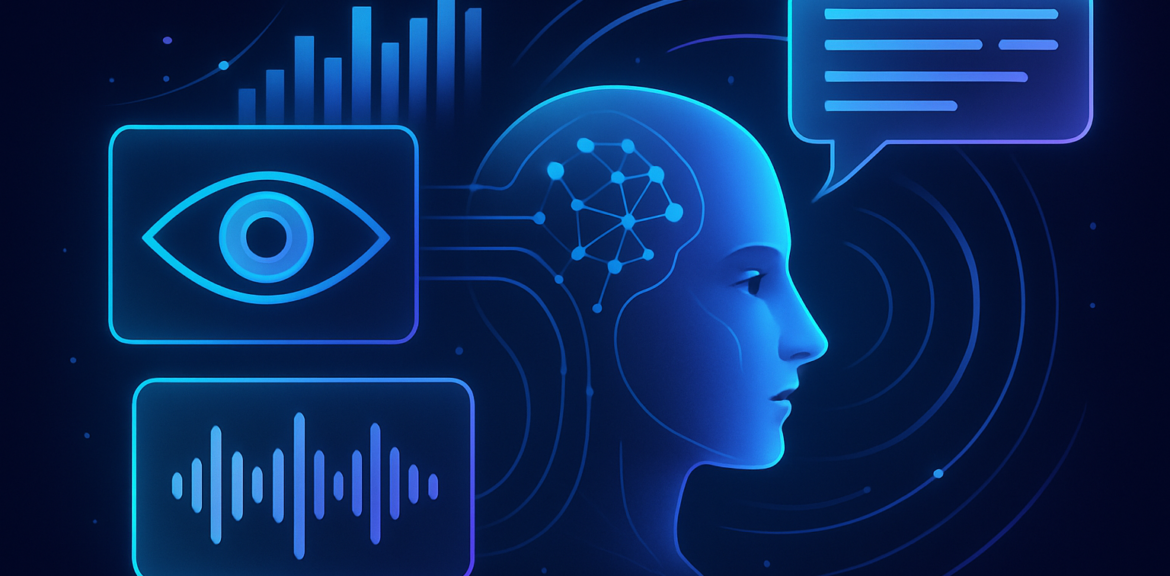

In the rapidly evolving landscape of artificial intelligence, a fascinating development is reshaping how machines perceive and interact with the world: multimodal AI. This innovative approach brings together vision, audio, and text data, allowing systems to comprehend and respond to complex environments more effectively than ever before. Through the integration of these modalities, AI models are achieving breakthroughs in areas ranging from autonomous vehicles to interactive digital assistants.
The Core of Multimodal AI
Multimodal AI refers to systems capable of processing and understanding information from multiple sensory inputs, similar to how humans rely on sight, sound, and language. This integration of modalities enhances the context and depth of AI’s understanding, enabling more nuanced and accurate responses. For example, a multimodal AI can interpret visual cues from a video, extract audio information, and understand the textual content all at once, making it incredibly adept at tasks like sentiment analysis and context-aware assistance.
Advancements in Multimodal Learning Models
Recent advancements in multimodal learning models have been significant. By leveraging deep learning techniques, these models can seamlessly blend inputs from different data sources. This capability is particularly useful in fields like healthcare, where simultaneous analysis of various types of data can lead to more accurate diagnostics and treatment plans. In entertainment, AI can now create more immersive experiences by synchronizing visual and auditory elements to better engage audiences.
Applications Transforming Industries
The rise of multimodal AI is transforming numerous industries by enhancing the capabilities of AI-driven systems. In autonomous driving, for instance, vehicles equipped with multimodal AI systems use vision for navigation, audio for environmental awareness, and text for communication, significantly improving safety and efficiency. Similarly, in the realm of customer service, chatbots are becoming more human-like by combining text and voice recognition, allowing for more comprehensive and satisfying user interactions.
The Role of Cross-Modal AI Technology
Cross-modal AI technology is pivotal in enabling these advancements. By developing systems that can draw correlations between different types of data, AI becomes more flexible and capable. For instance, security systems benefit from this by using facial recognition (visual input), voice recognition (audio input), and behavioral analysis (textual input) to offer robust security solutions.
Challenges and Future of Multimodal AI
Despite its potential, multimodal AI faces several challenges. The complexity of designing systems that can efficiently process and integrate diverse data types is non-trivial. Additionally, there are concerns about data privacy and the ethical use of AI, especially when it comes to handling sensitive information across multiple platforms. However, ongoing research and development continue to address these issues, paving the way for more advanced and ethical multimodal AI applications.
- Multimodal AI integrates vision, audio, and text for a holistic understanding.
- Enhancements in multimodal learning models are driving innovation in various sectors.
- Applications in autonomous driving and customer service highlight the transformative impact.
- Challenges include data integration complexity and ethical considerations.
As we move forward, the potential of multimodal AI to revolutionize technology and society remains immense. By continuously refining these systems, we are on the cusp of realizing AI that can not only mimic human senses but exceed them in precision and capability.
Frequently Asked Questions
- What is multimodal AI?
-
Multimodal AI is a system that integrates multiple data inputs, such as vision, audio, and text, to enhance its understanding and interaction capabilities.
- How does multimodal AI work?
-
Multimodal AI uses advanced learning models to process and combine different types of sensory data, improving context and decision-making.
- What are the applications of multimodal AI?
-
Applications include autonomous vehicles, interactive digital assistants, and enhanced customer service systems that use multiple input forms for better efficiency.
- What challenges does multimodal AI face?
-
Challenges include data integration complexity, ethical concerns, and ensuring privacy and security across diverse data types.