


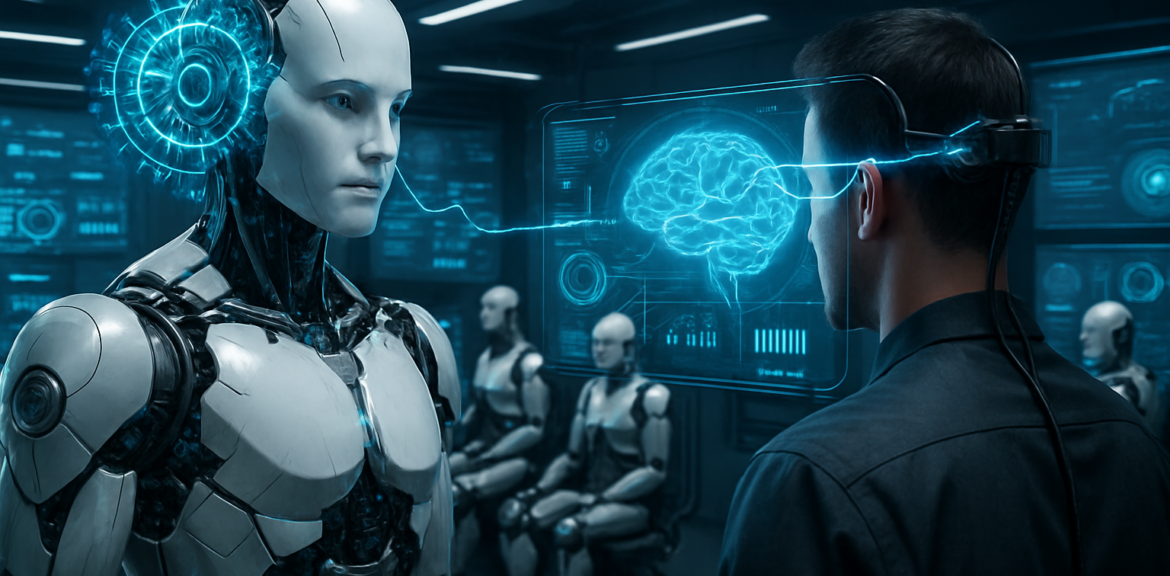

The year is 2025, and the landscape of robotics is undergoing a profound transformation, driven by advances in AI training for robots. This revolution is reshaping industries from manufacturing to healthcare, embedding artificial intelligence into the very fabric of robotic systems. Robots trained with AI are no longer mere tools but intelligent partners, capable of adapting to complex environments and solving intricate problems. This blog explores how AI is driving these changes and what we can expect in the near future.
AI Training for Robots: A New Era
The concept of training robots using AI has evolved significantly. The integration of machine learning for robots has empowered these machines with the ability to learn from their environment. Through AI-driven algorithms, robots can now process vast amounts of data, recognize patterns, and make decisions akin to human counterparts. This capability is particularly transformative in sectors like logistics and manufacturing, where robotic automation is essential for efficiency.
How Machine Learning Enhances Robotics
Machine learning is at the heart of AI training for robots. These algorithms allow robots to perform tasks by understanding and imitating human behavior. For instance, in the automotive industry, robots are trained to perform quality checks using computer vision, ensuring that each component meets stringent standards. This not only improves product quality but also significantly reduces human error.
Applications of AI and Robotics in 2025
The scope of AI and robotics has expanded beyond traditional boundaries. In 2025, they are central to the future of robotics across various fields:
- Healthcare: AI-trained surgical robots assist doctors with precision surgeries, reducing recovery times and improving patient outcomes.
- Retail: Autonomous robots manage inventory, personalize shopping experiences, and streamline supply chains.
- Agriculture: Drones and robotic harvesters equipped with AI manage crops and livestock, optimizing yield and sustainability.
The Challenges and Solutions in AI Training
While the advancements are impressive, they come with their own set of challenges. The complexity of algorithms and the need for extensive datasets pose significant hurdles. However, innovations like reinforcement learning and transfer learning are paving the way for more efficient training processes. These methods reduce the data dependency, allowing robots to learn faster and with greater accuracy.
“By 2025, AI-driven robots are expected to account for over 50% of industrial tasks, highlighting their growing importance.” – Industry Expert
Moreover, ethical considerations regarding AI decision-making are being actively addressed, ensuring that these systems align with human values and safety standards.
Key Takeaways
- AI training for robots is transforming industries by enhancing capabilities and efficiency.
- Machine learning enables robots to autonomously adapt and make decisions.
- Sectors like healthcare and agriculture are benefiting significantly from AI-trained robotics.
- Challenges such as complex algorithms and data requirements are being overcome with new training methods.
- Ethical concerns are guiding the development of AI and robotics to ensure safe and beneficial outcomes.
As we move forward, the symbiotic relationship between AI and robotics promises to redefine the boundaries of technology, offering unprecedented opportunities and challenges. The journey of AI training for robots in 2025 is just the beginning of a new era of intelligent automation.
Frequently Asked Questions
- How is AI used in training robots?
-
AI is used to train robots through machine learning algorithms that enable them to learn from data, adapt to environments, and perform tasks autonomously.
- What industries benefit from AI-trained robots?
-
Industries such as manufacturing, healthcare, retail, and agriculture benefit from AI-trained robots by improving efficiency, precision, and outcomes.
- What challenges are associated with AI training for robots?
-
Challenges include the complexity of algorithms, data requirements, and ensuring that AI aligns with ethical standards and human values.
- What is the future of AI and robotics?
-
The future of AI and robotics involves greater integration into various sectors, improved autonomy, and enhanced collaboration between humans and machines.