


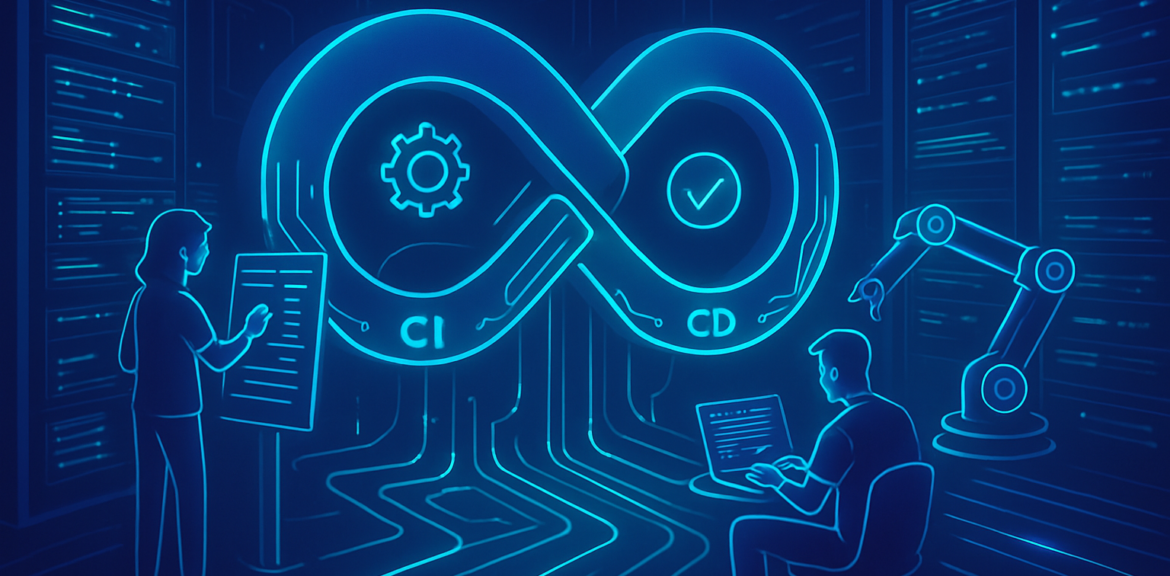

In today’s fast-paced software development landscape, the ability to release products rapidly and reliably is a competitive advantage. CI/CD pipelines — Continuous Integration and Continuous Delivery — are at the heart of achieving this goal. By automating the build, test, and deployment processes, CI/CD pipelines ensure that developers can focus on writing code while automating the rest of the workflow, leading to faster and more reliable software releases.
Understanding CI/CD Pipelines
At its core, a CI/CD pipeline is a series of automated processes that developer teams use to compile, test, and deploy their code. Continuous Integration (CI) involves automatically integrating code changes from multiple contributors into a shared repository several times a day. This approach ensures that errors are caught quickly and that the codebase remains in a deployable state.
On the other hand, Continuous Delivery (CD) takes it a step further by automating the deployment of the integrated code to production environments. With continuous delivery, code changes are automatically prepared for a release to production, allowing teams to deploy updates swiftly and reliably.
Benefits of Implementing CI/CD Pipelines
Implementing CI/CD pipelines offers numerous benefits that extend beyond just faster releases. Here are some of the key advantages:
- Improved code quality: Automated testing provides immediate feedback on the code, helping to catch bugs early and reduce technical debt.
- Reduced manual errors: Automation minimizes human errors by removing repetitive manual tasks from the process.
- Faster time-to-market: By accelerating the development process, companies can deliver new features to customers more quickly.
- Enhanced collaboration: Developers can work more effectively with real-time updates and integrations.
Key Components of a CI/CD Pipeline
A typical CI/CD pipeline consists of several components that work together seamlessly:
- Source Control: A version control system like Git is used for code collaboration and maintaining the source code.
- Build Automation: Tools like Jenkins or Travis CI automate the process of compiling code into executable programs.
- Automated Testing: Frameworks such as Selenium or JUnit run tests to ensure the code performs as expected.
- Deployment Automation: Platforms like Docker and Kubernetes automate the deployment process to different environments.
Implementing CI/CD in Your Organization
To successfully implement CI/CD pipelines, organizations should start by assessing their current development processes and identifying areas that would benefit the most from automation. Here are a few steps to consider:
- Adopt a culture of collaboration with DevOps practices.
- Integrate tools that fit your tech stack and development workflow.
- Start small and gradually automate more stages of the pipeline.
- Continuously monitor and refine the pipeline to address bottlenecks and improve efficiency.
Key Takeaways
- CI/CD pipelines are essential for automating software delivery processes.
- These pipelines improve code quality, reduce errors, and accelerate time-to-market.
- Integrating CI/CD requires careful planning and the right tools.
- Continuous monitoring and iteration are crucial for an effective CI/CD pipeline.
By adopting CI/CD pipelines, organizations can transform their software development processes, achieving faster releases with higher quality. Learn more about how CI/CD can revolutionize your dev operations.
Frequently Asked Questions
- What is a CI/CD pipeline?
-
A CI/CD pipeline automates the software development process, integrating code, running tests, and deploying applications efficiently.
- How does CI/CD improve software delivery?
-
CI/CD improves delivery by automating tasks, reducing errors, and enabling faster, more reliable software releases.
- What tools are used in CI/CD pipelines?
-
Common tools include Jenkins, Travis CI, Git for source control, and Docker for deployment automation.
- Why is CI/CD important for DevOps?
-
CI/CD is crucial for DevOps as it enhances collaboration, streamlines processes, and accelerates software delivery cycles.